

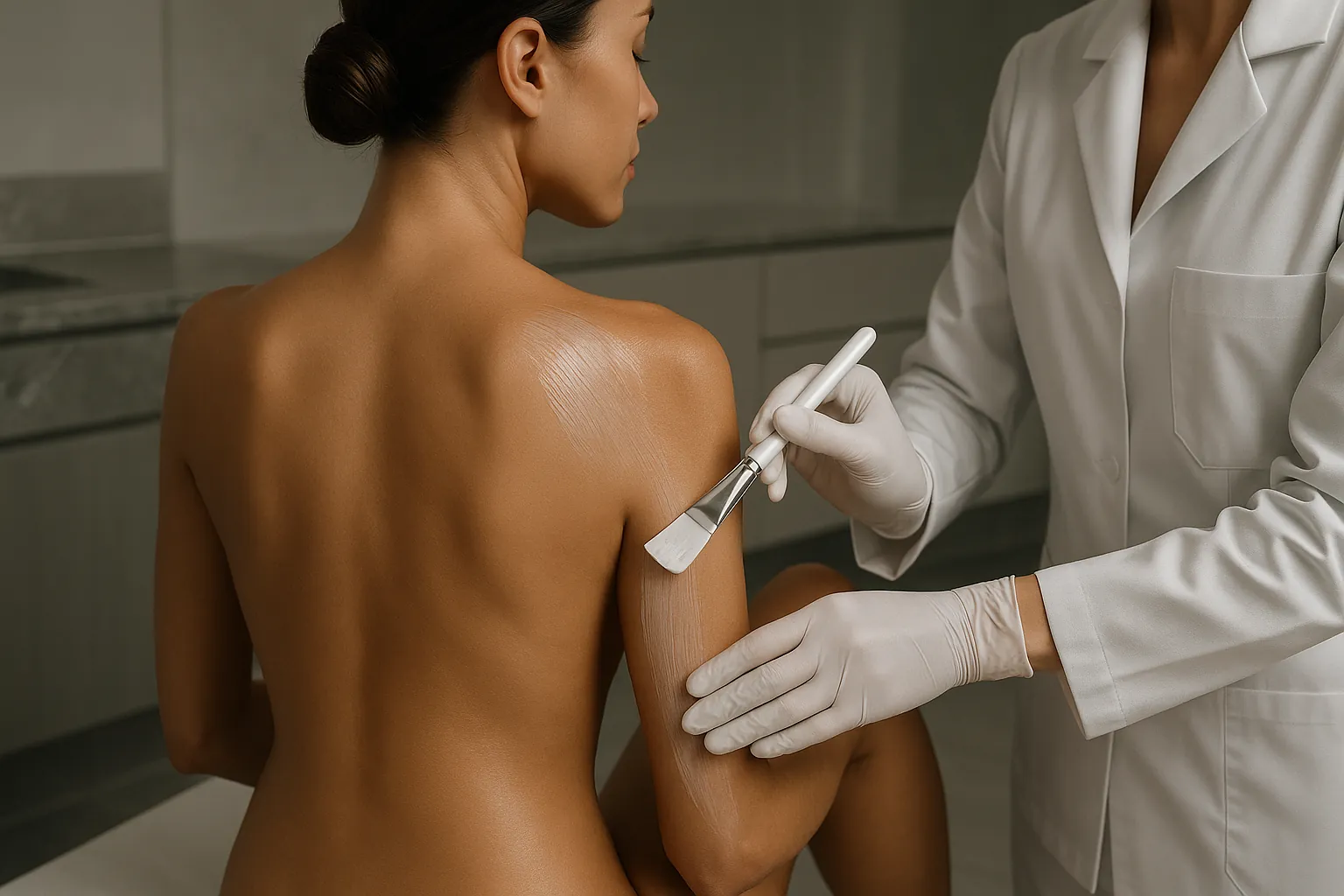
Understand Back Peel before booking
How back peels are planned for dark marks, rough texture and uneven skin tone. This guide explains treating uneven tone and texture on the back in a practical, client-friendly way. It covers what the treatment is meant to improve, what it cannot promise, and how BABE approaches planning with restraint.
What this article covers
You will learn what Back Peel is designed to do, who it may suit, what result is realistic, and which details should be checked before choosing a plan.
Who this guide is for
For clients researching Back Peel in Bali who want more than a quick sales page and prefer to understand the treatment properly before consultation.
What to expect over time
Peel results depend on the skin concern and depth of treatment. Redness, dryness or flaking can happen, while pigment and texture improvement often need careful aftercare and sometimes more than one session.
Safety and suitability notes
Back Peel needs proper suitability checking, especially with pigmentation, active acne, sensitivity or recent skincare actives. Sun protection is not optional after a peel.
What to ask in consultation
Ask which peel is being used, how strong it is, what downtime to expect, what skincare to stop, how to manage sun exposure and whether a gentler facial would be safer first.
Why this matters for Back Peel
How back peels are planned for dark marks, rough texture and uneven skin tone. This guide is written for clients who want to understand Back Peel before sitting in the treatment chair. The goal is not to push one option, but to make the consultation clearer, safer and more useful.
How Back Peel works
Chemical peels use controlled exfoliation to support tone, texture, congestion, acne marks or dullness depending on the peel selected. The therapist checks skin tone, sensitivity, active acne, pigmentation, recent skincare and sun exposure before choosing the peel strength.
What makes the plan personal
The right approach depends on your starting point, treatment history, comfort level and desired finish. The consultation should explain why this treatment is being recommended instead of simply listing what is available.
What to ask during consultation
Ask which peel is being used, what downtime to expect, what products to stop beforehand and how to protect the result after treatment. You should also ask what would make the clinician choose a different treatment, because that answer often reveals whether the plan is truly personalised.
How to keep the result refined
Peel safety depends heavily on aftercare: sun protection, avoiding harsh actives and respecting healing time matter as much as the treatment itself. Good results usually come from correct treatment choice, measured planning, aftercare and review timing — not from doing the most in one visit.
When Back Peel may not be the right first step
A peel can improve surface concerns, but it will not replace scar procedures, injectables or medical treatment when the concern is deeper. If the concern is coming from a different cause, BABE may recommend an alternative or combined plan rather than forcing the treatment to fit.
The takeaway
Back Peel: treating uneven tone and texture on the back is a useful topic because it helps you arrive with better questions. The most valuable outcome is a plan that is safe, realistic and elegant enough to still feel like you.
Still researching Back Peel?
Use this guide as a starting point, then compare it with the Back Peel treatment page or ask BABE which option fits your concern.